
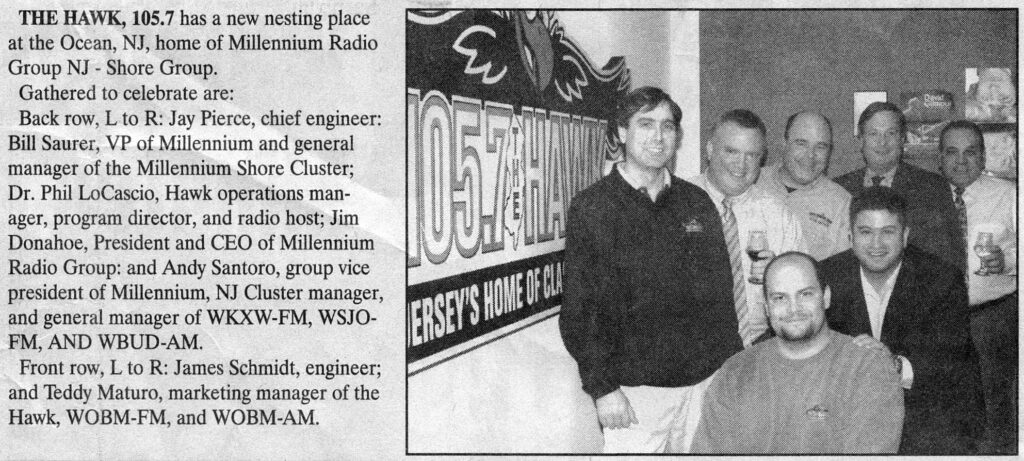
Before my current role as Director of Cybersecurity for North America’s second-largest student transportation company, I had humble beginnings as a broadcast engineer for a group of AM/FM radio stations along the Jersey Shore.
Broadcasting doesn’t forgive mistakes. Thousands of dollars are at stake in any given hour, and technology always fails at the worst moment. There’s no “we’ll fix it tomorrow” — the signal either goes out clean, or it doesn’t. Sponsors are depending on that signal to stay in business. Sometimes people are listening for news or crisis updates. You learn to think on your feet and stay calm when something breaks live, because real things depend on you getting it right, fast.
In 7+ years in broadcasting, I watched the entire medium shift — CDs and carts giving way to PC-based automation, digital audio cards, and computer networks reaching into the studio. When something broke, it could be anywhere in that chain. You had to know your systems, decide with confidence, and own the outcome — good or bad.
I loved radio engineering. I didn’t take a traditional “IT degree → security certifications → CISO track” path into this field — I got here through the love of technology and music colliding, then a series of opportunities I said yes to along the way.
I still consider myself early in my cybersecurity career, and no one has hands-on experience in every facet of this field. But I came in with a real foundation — infrastructure, engineering, staying calm when something’s on fire — built somewhere no one would think to look for it.
If your background doesn’t look like the “right” path, it might already be the training you don’t realize you have. Stay the course, or “tuned-in!”
What’s a skill from an earlier chapter of your career that shows up in your work today, even if no one would guess the connection?
Originally posted on LinkedIn on August 15, 2026.